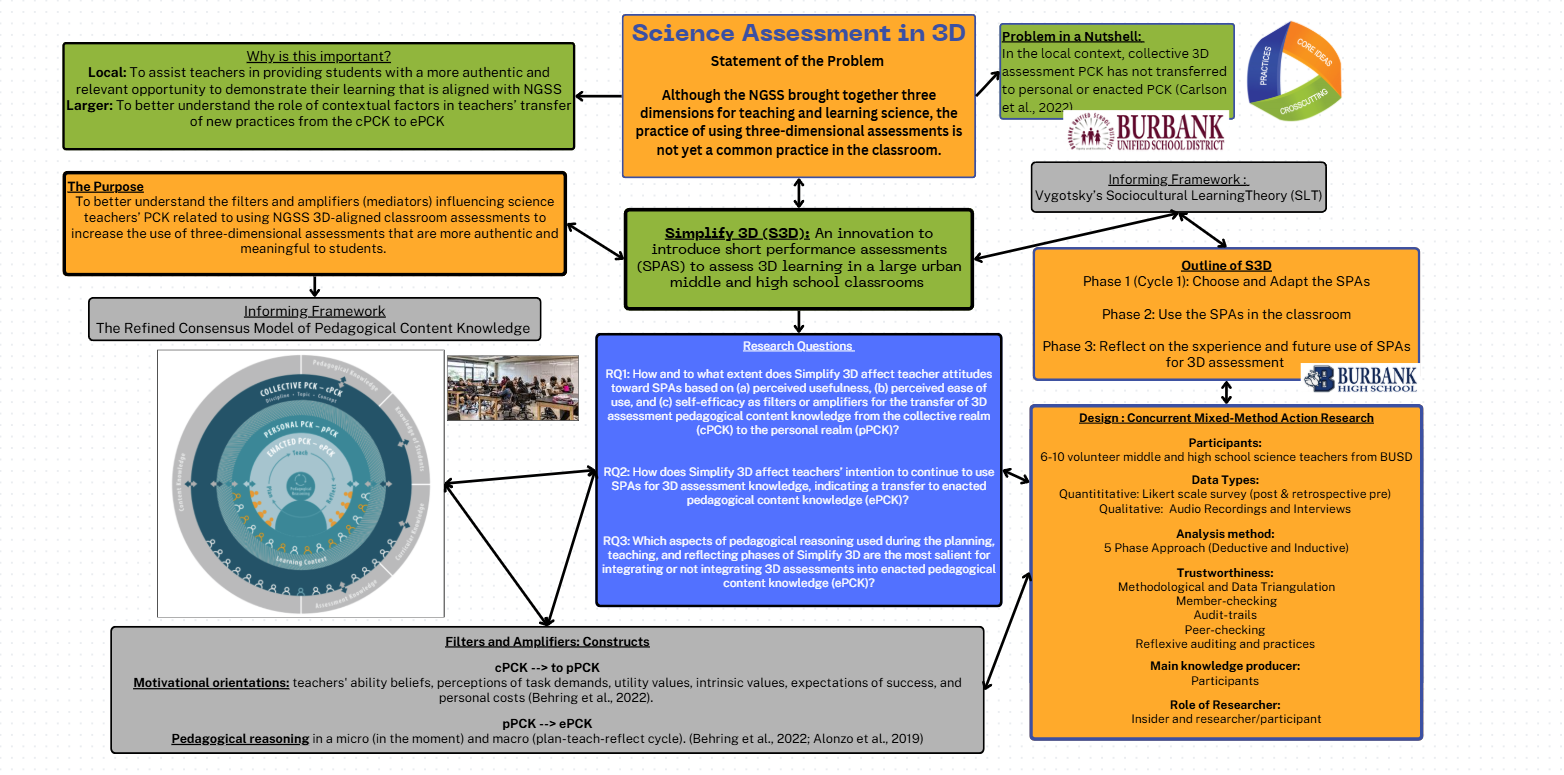
Despite over a decade of reform efforts, three-dimensional (3D) science assessment aligned with NGSS remains rare in everyday classroom practice. This case study explores why and presents a practical solution.
Through a mixed-methods action research study, high school science teachers engaged with Simplify 3D (S3D), a professional learning model centered on Short Performance Assessments (SPAs).
Key Insight: When given tools that fit their time, workload, and students, teachers don’t resist change; they make it happen. Simplify 3D shows that when assessment is designed with teachers' realities in mind, meaningful and lasting classroom change follows. Support teachers, and reform becomes reality.
The Challenge
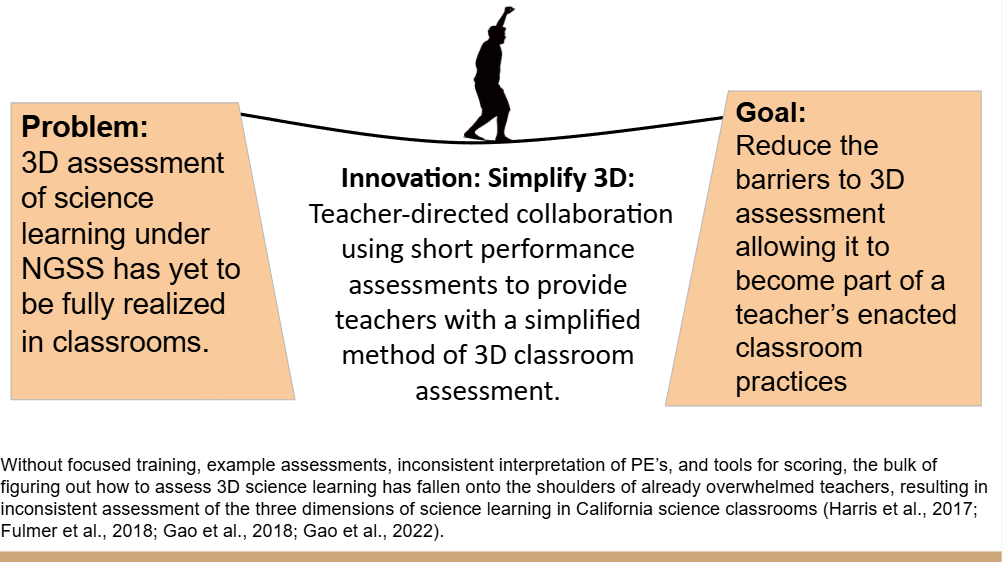
While NGSS emphasizes 3D learning, integrating content, practices, and crosscutting concepts, assessment has lagged. Most classrooms still rely on traditional, discrete measures of knowledge.
Common assumptions suggest: 1) Teachers lack understanding of 3D assessment and 2) Teachers resist reform practices
This study challenges those assumptions. Instead, it asks:
Under what conditions can teachers realistically implement 3D assessment?
The Approach
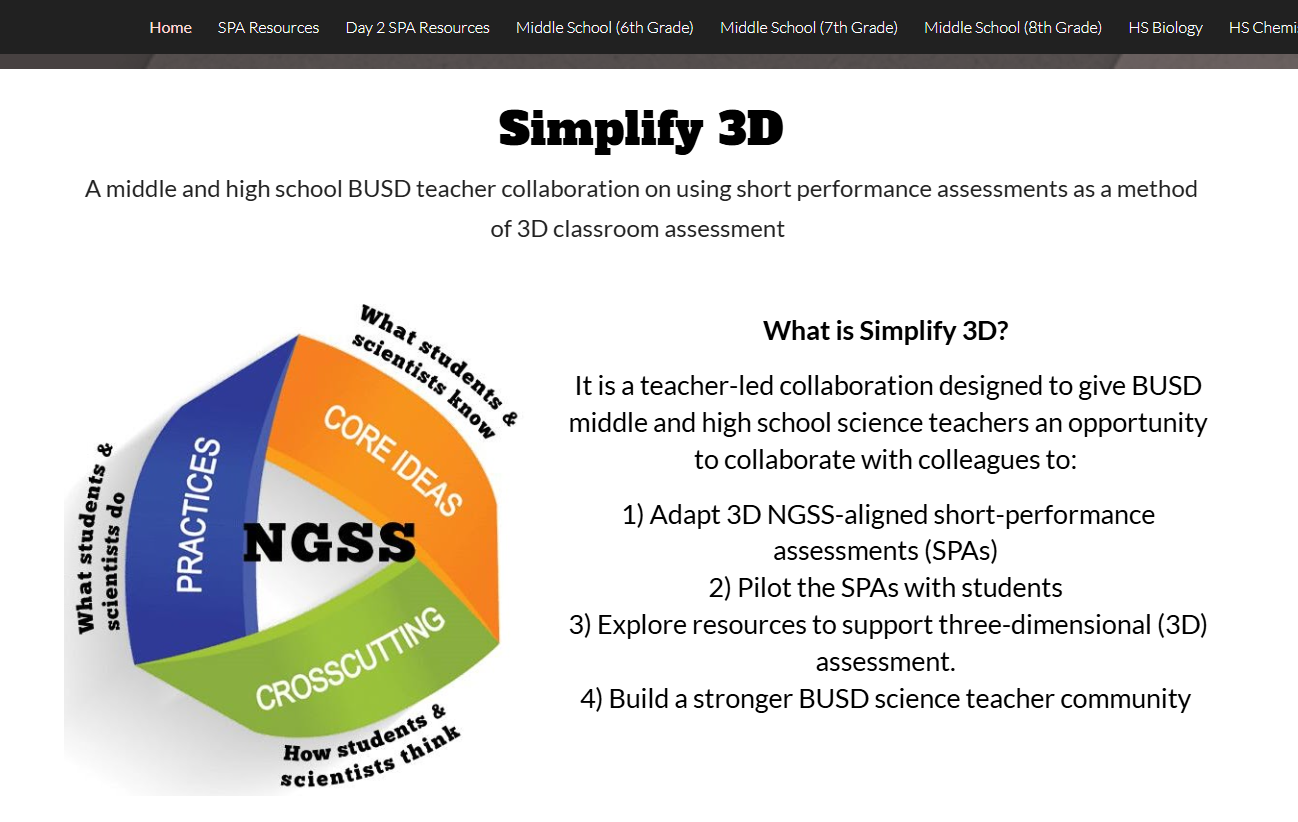
To address this gap, I developed Simplify 3D (S3D). S3D is a professional learning model designed to make 3D assessment practical with teacher collaboration and a feasible assessment method.
At the center of this model are Short Performance Assessments (SPAs), which are designed for a single class period, fully aligned to 3D learning, structured but adaptable, and manageable to grade.
Middle and High School Science Teachers worked through a Plan–Teach–Reflect cycle, collaborating to design, implement, and refine these assessments in real classrooms.
This required collaboration with district leaders, aligning goals, scheduling, advertising, recruiting, creating a website, finding SPA examples, facilitating teacher collaboration, conducting interviews, and creating the materials used in collaboration activities.
What the Data Shows
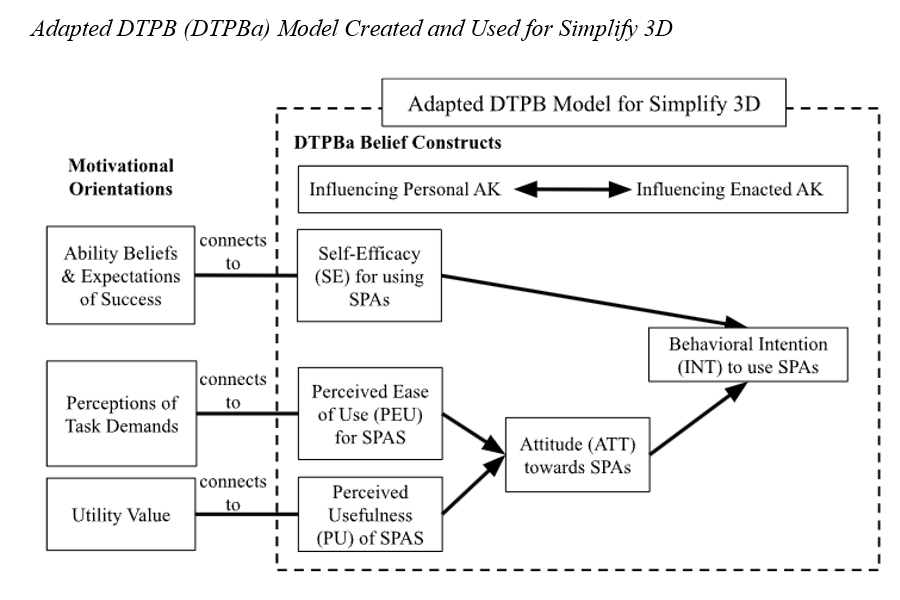
Across sources, a consistent pattern emerged: teachers increased in confidence and perceived value of 3D assessment, while also identifying feasibility as the primary factor influencing whether implementation occurred.
The convergence of survey, interview, and classroom data provides strong evidence that S3D not only influenced teacher thinking but also supported real changes in classroom practice while highlighting feasibility as the critical condition for sustainability.
Quantitative trends indicated:
1) Growth in teacher confidence in implementing 3D assessments
2) Increased perception that SPAs were practical and usable
3) Greater intention to continue using SPAs
Qualitative data reinforced these findings, revealing that:
1) Teachers shifted from hesitation to experimentation
2) SPAs reduced perceived workload barriers
3) Collaboration supported sustained use
Key Findings
1. Teachers Are Not Resistant to Reform
It’s not about convincing teachers to change; it’s about making change doable.
The teachers I worked with wanted to use 3D assessments. They saw the value, they were excited about it, and they were open to trying new approaches. Teachers understand that real change is messy and that’s part of the process.
But wanting to do something and being able to sustain it are two different things.
2. Feasibility Determines Implementation
Even strong, well-designed ideas didn’t stick if they were too time-consuming or complicated. Most teachers ran into the same challenges: planning/grading time, high student cognitive loads requiring differentiation, and student readiness.
Teachers made it work only when it fit into their real day-to-day teaching. This is imperative. The best ideas only matter if they actually work in a real classroom.
3. SPAs Bridge Vision and Design
You don’t have to lower expectations to make something workable; you just have to design it better.
SPAs worked because they fit classroom realities, not because they simplified standards. They:
- Fit within existing time structure
- Maintain 3D rigor
- Reduce grading burden
- Allow flexible adaptation
4. Collaboration Increases Self-Efficacy
Collaboration functioned as more than support and it redistributed workload.
Teachers were able to:
- Co-design assessments
- Share strategies
- Normalize challenges
Change is a lot more sustainable when teachers aren’t doing it alone.
5. Implementation Is Conditional
Enactment occurred only when three conditions aligned:
- Teachers saw value (perceived usefulness)
- Teachers felt capable (self-efficacy)
- Contextual barriers were minimized
What mattered was having the space and collaboration to try, reflect, and adjust to change beliefs and show feasibility.
Consistent with sensemaking theory, the continued use of SPAs happened at the intersection of motivational beliefs and contextual factors.
Implications
For Instructional Design, feasibility must be a core design principle. Alignment alone is not enough
For Professional Learning, effective support must address:
- Time constraints
- Grading workload
- Adaptation strategies
For Systems & Policy, sustainable reform requires structural change:
- Time allocation
- Assessment expectations
- Institutional supports